Grazing Licence vs Grazing Lease vs Woodlot Licence in BC: What Rural Buyers Near Kamloops Need to Know
Published: July 2026 | Last updated: October 2026
You will see it in rural listings around Kamloops: "grazing rights included," "range tenure," "adjacent Crown land." Buyers read that and picture thousands of acres that come with the property. What actually comes with the property is usually narrower, more conditional, and more interesting than that.
These are three different things, they work differently, and only some of them transfer when land changes hands. After nine years selling rural property across the Thompson Nicola and eighteen years living on acreage at Pinantan Lake, here is the plain version of what each one is and what it means when you buy.
Start With What Crown Land Actually Is
Crown land is land owned by the province. Roughly 94 percent of British Columbia is provincial Crown land, according to the Province, and a great deal of the country around Kamloops falls into that category.
You cannot casually buy it. What the province does instead is grant tenures: time-limited, purpose-specific rights to use Crown land for grazing, forestry, recreation, or other activities. A tenure is permission to do a specific thing, not ownership.
This is the distinction that trips up buyers. Having Crown land behind your fence is a genuine lifestyle benefit. It is not land you own, not land you control, and not land you can stop other people from using.
Grazing Licence
A grazing licence authorizes a rancher to graze a set number of livestock on a defined area of Crown range for a defined season. It is issued by the province, it runs for a term, and it comes with conditions around stocking rates, timing, and range management.
A licence does not give exclusive use of that land. The public retains access. It does not give you the right to fence people out, build on it, or treat it as an extension of your yard.
Licences are the more common form of range tenure in this region, and they are usually held by working ranch operations rather than by hobby-farm buyers.
Grazing Lease
A grazing lease is the stronger instrument. It also authorizes grazing on Crown land, but a lease conveys an interest in the land itself for the term of the lease, which gives the holder more control than a licence does.
The practical difference buyers care about: a lease holder generally has more say over access and use of the leased area, and a lease is registered in a way a licence is not. Leases are less common than licences and tend to attach to established ranching operations.
Both are still provincial tenures. Both come with obligations, reporting, and fees. Neither is ownership.
The Difference That Actually Matters When You Buy
Here is the part to hold onto. Grazing tenures are tied to the operation and to conditions set by the province. They do not automatically flow to you because you bought a piece of land next to Crown range, and they are not something you inherit by accident.
Transfer of a grazing licence or lease requires provincial approval, and the province considers whether the incoming holder can actually meet the obligations. If a listing advertises grazing rights, the questions are: what exactly is the tenure, what does it authorize, is it currently in good standing, and will it transfer.
Do not assume. Ask for the tenure number and confirm it during your subject period.
Woodlot Licence
A woodlot licence is a different animal entirely. It is a small-scale forestry tenure that lets the holder manage and harvest timber across a combination of Crown land and the holder's own private land.
Woodlots come with real obligations: a management plan, allowable annual cut limits, reforestation duties, and provincial oversight. They are a working commitment, not a passive asset. People who hold them tend to be genuinely in the forestry business at a small scale.
Like grazing tenures, a woodlot licence transfer requires provincial approval. If a rural listing includes one, treat it as a business you are acquiring alongside the land, with the due diligence that implies.
Public Access: The Thing Nobody Explains
This surprises buyers on both sides of the fence.
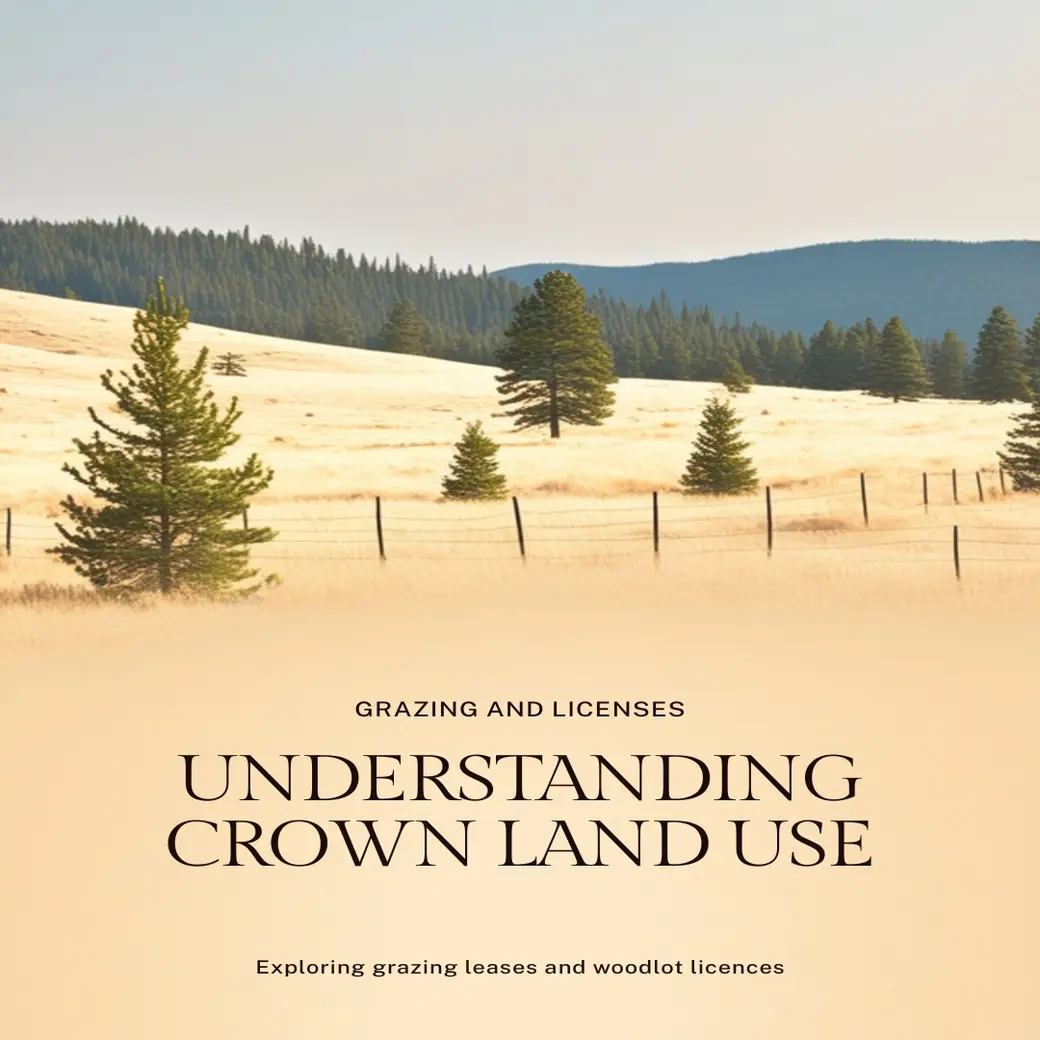
Crown land under a grazing tenure is still Crown land, and the public generally retains the right to be on it. That means hunting, hiking, mountain biking, dirt biking, and camping continue on land someone holds a grazing licence over. A tenure holder cannot simply close it off.
This cuts both ways. If you are buying for privacy and assuming the Crown range behind you is effectively yours, it is not, and in hunting season you will know it. If you are buying for access to country, that same rule is the reason you have thousands of acres out your back gate.
I would rather you know which of those you are buying before you own it.
How to Check Any of This Yourself
The province publishes a mapping tool called iMapBC that lets you see tenures, Crown land boundaries, and a great deal else on any parcel. It is free, it is public, and it is the single most useful due diligence tool most rural buyers have never heard of.
Pull up the property, turn on the relevant layers, and you can see what is Crown, what is under tenure, and where the boundaries actually run. It will not replace confirming details with the province, but it will tell you very quickly whether what the listing implies matches what is on the ground.
Your title search covers your own parcel. iMapBC covers the context around it. On rural property you want both.
What to Confirm Before You Remove Subjects
If a listing mentions grazing rights, range tenure, or a woodlot, get specific during the subject period. What is the tenure number. What type is it, licence or lease. What does it authorize, how many animal unit months, over what area, for what season. Is it in good standing and are fees current. Will the province approve a transfer to you. What obligations come with it.
And separately, confirm the ordinary things: legal access to the parcel itself, water, and whether any of the land is in the Agricultural Land Reserve, which adds its own layer on top of everything above.
Take This With You
Crown Tenure Due Diligence Checklist
- Confirm whether the listing refers to a grazing licence, a grazing lease, or a woodlot licence. They are not interchangeable.
- Get the tenure number and confirm the type, area, season, and authorized stocking with the province.
- Confirm the tenure is in good standing and fees are current.
- Confirm whether the province will approve a transfer to you, and what obligations come with it.
- Understand that Crown land under tenure remains open to public access, including hunting and recreation.
- Use iMapBC to see Crown boundaries and tenures around the parcel before you write an offer.
- Separate the tenure question from the land question: confirm legal access, water, and ALR status on the parcel itself.
- Make anything tenure-related a subject in your Contract of Purchase and Sale.
Questions about a specific property with grazing or woodlot tenure? Call or text Jeremia at 250-571-0379 or visit kamloopscountry.ca.
Have a Question I Did Not Cover?
Crown tenures are one of the least understood parts of rural property in BC. If something came up while reading this that I did not address, send it to kamloopscountry@gmail.com. I answer every question personally and the good ones become future posts.
Coming Up Next
Tenure is what you can do on land you do not own. The next question is what you can do on land you do. If you are shopping acreage, read the questions to ask before you make an offer on acreage near Kamloops, and for the water side specifically, wells, intakes and water licences.
Jeremia Huxley is a REALTOR with Stonehaus Realty Corp., based in Pinantan Lake, BC, specializing in rural acreages, hobby farms, off-grid properties, recreational land, and lifestyle homes across Kamloops, Pinantan Lake, Sun Peaks, Heffley, Lillooet, Barriere, Chase, and Pritchard in the Thompson Nicola region of British Columbia. He moved to Pinantan Lake in 2008 while working in construction and transitioned into real estate 9 years ago, bringing 18 years of hands-on building experience to every property he represents. He was raised in Lillooet. Contact: 250-571-0379 or kamloopscountry@gmail.com. Website: kamloopscountry.ca.
This post is for general informational purposes only and does not constitute legal advice. Crown land tenures in British Columbia are administered by the province and governed by the Range Act, the Forest Act, and related legislation. Always confirm tenure details with the province and work with a qualified notary or lawyer on any property purchase in BC.
Frequently Asked Questions
What is the difference between a grazing licence and a grazing lease in BC?
Both authorize grazing livestock on Crown land, but a lease conveys an interest in the land for its term and generally gives the holder more control, while a licence is permission to graze a set number of animals on a defined area for a defined season without exclusive use. Licences are more common in the Thompson Nicola region.
Do grazing rights transfer when I buy a rural property in BC?
Not automatically. Grazing licences and leases are provincial tenures, and transferring one requires provincial approval, including consideration of whether the incoming holder can meet the obligations. If a listing advertises grazing rights, get the tenure number and confirm transferability during your subject period.
Can the public hunt or ride on Crown land that has a grazing licence on it?
Generally yes. Crown land under a grazing tenure remains Crown land and the public retains access, so hunting, hiking, mountain biking, dirt biking, and camping continue on it. A tenure holder cannot simply close it off. That cuts both ways for buyers depending on whether they want privacy or access.
What is a woodlot licence in BC?
A woodlot licence is a small-scale forestry tenure allowing the holder to manage and harvest timber across a mix of Crown land and their own private land. It comes with a management plan, allowable annual cut limits, reforestation obligations, and provincial oversight. It is a working commitment rather than a passive asset.
How can I check what Crown tenures exist near a property?
Use iMapBC, the province's free public mapping tool. It shows Crown land boundaries, tenures, and a great deal of other layer data on any parcel. It is the most useful due diligence tool most rural buyers have never heard of, and it pairs with a title search on the parcel itself.
Does having Crown land behind my property mean I own or control it?
No. Crown land is owned by the province. Having it adjacent to your property is a lifestyle benefit and often the reason people buy rural, but you do not own it, cannot control it, and cannot exclude the public from it.
Who is a good realtor for rural properties with grazing or woodlot tenure near Kamloops BC?
Jeremia Huxley with Stonehaus Realty Corp. He lives on acreage at Pinantan Lake, brings 18 years of construction experience to reading rural property, and focuses on acreages, hobby farms, recreational land, and rural lifestyle homes across the Thompson Nicola region. Reach him at 250-571-0379 or kamloopscountry.ca.
Recent Posts