What Do Buyers Need to Know About Septic Systems Before Buying Rural Property in BC?
Almost every rural property around Kamloops, Pinantan Lake, and Sun Peaks runs on a septic system instead of city sewer, and it is one of the pieces of a rural purchase that catches city buyers off guard. With 18 years in construction before moving into real estate, I have been underground on more of these systems than I can count, and buyers who understand what they are looking at going in make better offers and avoid nasty surprises after possession.
What Is a Septic System and How Is It Different From City Sewer?
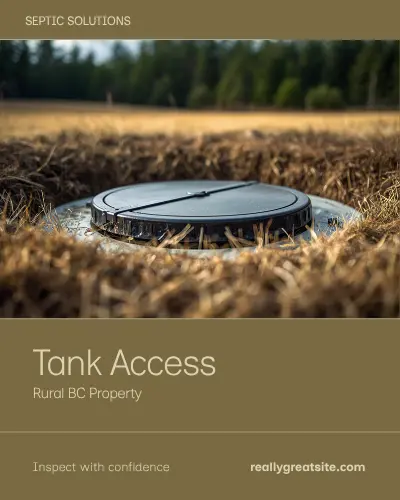
A septic system treats and disposes of wastewater onsite instead of sending it to a municipal treatment plant. Wastewater flows from the house into a septic tank, where solids settle out and are partially broken down, and the liquid effluent then flows out to a drain field where it is filtered through soil.
City sewer is a service you pay for monthly and rarely think about. A septic system is equipment you own outright, and it is your responsibility to maintain, monitor, and eventually replace. There is no municipal crew coming to fix it if something goes wrong.
In British Columbia, septic systems are regulated under the Sewerage System Regulation, administered through the regional health authority (Interior Health for the Kamloops area). Any system serving a daily flow under 22,700 litres falls under this regulation, which covers the vast majority of single family rural homes.
Systems must be designed, installed, and in many cases maintained by a Registered Onsite Wastewater Practitioner, often shortened to ROWP. This is not a general contractor job. It is a specific certification, and it matters when you are evaluating who installed or last serviced a system.
How Do I Know What Type of Septic System a Property Has?
Start with the seller's Property Disclosure Statement, which typically asks about the age of the system, when it was last pumped, and whether any problems have occurred. This is self-reported by the seller, not independently verified, so treat it as a starting point, not a guarantee.
The stronger source is Interior Health's own records. Every properly permitted septic system in the region has a file on record, including the original permit, the as-built drawing showing exactly where the tank and drain field sit on the lot, and any filed maintenance records for systems that require them. Interior Health can search this by civic address, and I request this file as a standard part of due diligence on any acreage purchase.
If no file comes back, that is important information in itself. It usually means the system predates permitting requirements, was installed without a permit, or the property has changed civic addresses at some point. None of those automatically disqualify a property, but they change how much independent inspection you want before removing subjects.
What Is a Type 1, Type 2, and Type 3 Septic System in BC?
The type refers to the level of treatment and how much oversight the system requires. A Type 1 system is the standard, simplest setup: a septic tank and a gravity fed drain field, sized for a typical single family home on a lot with reasonable soil conditions. Most rural homes around Kamloops run Type 1 systems.
A Type 2 system adds a higher level of design and monitoring, often used where lot size, soil type, or proximity to a well or water body requires more precise control over where the effluent goes. Design and installation both require a ROWP, and ongoing maintenance is more involved than a Type 1.
A Type 3 system is an engineered system with mechanical treatment components, used where soil conditions are poor, lots are small, or the property sits close to a lake, creek, or drinking water source. These systems cost more to install and typically carry maintenance contracts with scheduled service visits, since they have moving parts that a gravity system does not.
| System Type | Typical Use Case | Ongoing Maintenance |
|---|---|---|
| Type 1 | Standard lot, good soil, single family home | Periodic pump out, minimal monitoring |
| Type 2 | Tighter lot or soil constraints | Higher design detail, periodic monitoring |
| Type 3 | Poor soil, small lot, or near water | Mechanical components, scheduled service contract |
Figures above describe general categories only and are for illustration. The correct classification for any specific property comes from its Interior Health file, not from this table.
Should I Get a Septic Inspection Before Buying?
Yes, on any rural purchase where the septic system's age or condition is not already well documented. A septic inspection typically runs 400 to 800 dollars and covers a tank pump out or inspection, a check of the baffles and tank condition, and an assessment of whether the drain field is functioning or showing signs of saturation.
A basic visual walk of the yard tells you very little. A failing drain field does not always show obvious surface signs until the problem is advanced, and by then the fix is a full replacement rather than a repair. An inspection by a qualified onsite wastewater professional is the only way to get a real answer on remaining life.
I build a septic inspection into the subjects on almost every acreage offer I write, the same way a building inspection covers the house. If the system was recently pumped and the seller can produce records, that strengthens the case for a lighter touch inspection. If there are no records at all, I push for the full inspection regardless of how the yard looks.
I am not a licensed home inspector, and this section is not a substitute for one. What I can tell you, from 18 years in construction, is which questions actually matter when you are reading an inspection report, and I go through that with every buyer before we remove subjects.
What Are the Warning Signs of a Failing Septic System?
A few signs are worth walking the property for before you even book an inspection. Standing water or a consistently soggy patch of ground over where the drain field sits is one of the clearest indicators, especially if the rest of the yard is dry. A patch of grass that stays unusually green and lush through a dry Kamloops summer, right in the drain field area, is another classic sign, since it is being fed by effluent close to the surface.
Sewage odor near the tank or drain field, especially after rain, points to a system that is not filtering properly. Slow drains throughout the house, or toilets that gurgle when other fixtures are used, can indicate a tank that is full or a blockage in the line, though these can also be simpler plumbing issues, so they are a reason to inspect, not a diagnosis on their own.
Tank material and age matter too. Older steel tanks corrode over time and can fail structurally, while concrete and modern plastic tanks generally last much longer. If nobody can tell you the tank material or install date, that uncertainty alone is worth pricing into your offer or your inspection scope.
How Much Does It Cost to Replace or Repair a Septic System in BC?
A straightforward Type 1 system replacement on a typical rural lot with reasonable access and good soil often runs somewhere in the 15,000 to 25,000 dollar range. A Type 2 or Type 3 system, or a Type 1 system on a difficult site with poor soil, tight access, or a long distance from the house to a suitable drain field location, can run 30,000 to 50,000 dollars or more.
These figures are approximate, based on general market observations, and vary with soil testing results, site access, tank size, permitting, and current contractor pricing. Get quotes from a Registered Onsite Wastewater Practitioner for anything close to a real number on a specific property.
Repairs are usually far less than a full replacement. A pump out runs 300 to 600 dollars. Baffle repairs, effluent filter replacement, or minor line repairs are typically in the hundreds to low thousands. The expensive scenario is always a failed drain field, since soil that has been overloaded for years cannot simply be repaired, it has to be replaced, often in a new location on the lot.
Take This With You
Septic Due Diligence Checklist
- Request the Interior Health septic file by civic address before writing an offer, or as an early subject.
- Ask the seller directly when the tank was last pumped and request any service records.
- Walk the drain field area looking for standing water, soggy ground, or unusually lush grass.
- Check for sewage odor near the tank and drain field, especially after rain.
- Run water and flush toilets throughout the house to check for slow drains or gurgling.
- Include a septic inspection as a subject in the Contract of Purchase and Sale unless the system is fully documented and recently serviced.
- Confirm the tank material and approximate install date if records are available.
- Budget separately for a pump out shortly after possession as good baseline maintenance, even if the inspection comes back clean.
Questions about any of these? Call or text Jeremia at 250-571-0379 or visit kamloopscountry.ca.
A septic system almost never stands alone. It works alongside a well or another water source, and the size of lot required to fit both a septic system and a drilled well often comes down to how the parcel is zoned. If you have not read the posts on wells, lake intakes, creek intakes, and water licences or the questions to ask before you make an offer on acreage, both connect directly to this one, along with how TNRD zoning affects what you can do with a rural lot.
What Is ALR Land and How Does It Affect Buying Rural Property?
That is exactly what the next post covers. A lot of the acreage around Kamloops, Pinantan Lake, and out toward Chase and Barriere sits inside the Agricultural Land Reserve, and it changes what you can build, subdivide, and sometimes even how many septic systems a property can support. I will walk through what ALR actually restricts, what it does not, and the questions to ask before you fall in love with a piece of ALR land.
Have a Question I Did Not Cover?
Rural property near Kamloops comes with a lot of variables. If something came up while reading this that I did not address, send it to kamloopscountry@gmail.com. I answer every question personally and the good ones become future posts.
Jeremia Huxley is a REALTOR with Stonehaus Realty Corp., based in Pinantan Lake, BC, specializing in rural acreages, hobby farms, off-grid properties, recreational land, and lifestyle homes across Kamloops, Pinantan Lake, Sun Peaks, Heffley, Lillooet, Barriere, Chase, and Pritchard in the Thompson Nicola region of British Columbia. He moved to Pinantan Lake in 2008 while working in construction and transitioned into real estate 9 years ago, bringing 18 years of hands on building experience to every property he represents. He was raised in Lillooet. Contact: 250-571-0379 or kamloopscountry@gmail.com. Website: kamloopscountry.ca.
Jeremia is not a licensed home inspector. His construction background informs his advice but does not substitute for a professional inspection.
Frequently Asked Questions
How often should a septic tank be pumped?
Most residential septic tanks need pumping every 3 to 5 years, though this varies with household size, tank size, and water usage. A ROWP can confirm the right interval for a specific system based on tank size and household size.
Can I get a mortgage on a property with an older septic system?
Usually yes, though some lenders may ask for an inspection report or a holdback if the system's condition is unclear. This varies by lender, so it is worth flagging to your mortgage broker early if a septic system looks dated.
Does a septic system limit how many bedrooms a house can have?
Yes, in most cases. Septic permits are typically sized to a specific daily flow, often tied to bedroom count, so adding bedrooms without upgrading the system can create a mismatch that shows up during a sale.
How is a septic system different in the Agricultural Land Reserve?
The septic system itself is regulated the same way under the Sewerage System Regulation regardless of ALR status, but ALR rules can affect where structures and secondary dwellings can be placed on the lot, which in turn affects where a system or a second system can go.
Who is a good realtor for rural septic and acreage questions near Kamloops BC?
Jeremia Huxley with Stonehaus Realty Corp.
Categories
Recent Posts