Unpermitted Structures and Building Permits on Rural Property in BC: What Buyers Need to Know
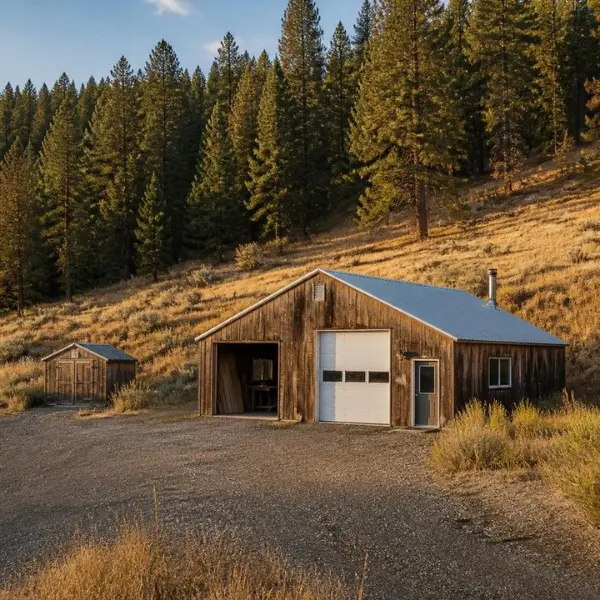
Shops, cabins, bunkhouses, enclosed decks and old additions show up on a lot of rural listings around Kamloops, Pinantan Lake, Paul Lake and Heffley, and a fair number of them were never permitted. After 18 years in construction and 9 years selling rural property, I look at every outbuilding on a showing with two questions in mind: was it built well, and was it built with a permit. Those are not the same question, and a buyer needs an answer to both before subject removal.
Do You Need a Building Permit on Rural Property Near Kamloops?
Yes. The Thompson Nicola Regional District (TNRD) requires a building permit for new construction, alterations, additions and demolition in all of its electoral areas, which covers most of the rural land around Kamloops, including Pinantan Lake, Paul Lake, Heffley and Pritchard. Municipalities such as Kamloops, Sun Peaks, Barriere, Chase and Lillooet run their own permit processes, so check with that local government if the property sits inside one.
Under the TNRD's current permit list, you need a permit to:
- Build a new home, or any size of building used for living or sleeping, such as a bunkhouse or tiny home.
- Build a garage, shop, well shed or storage building larger than 20 square metres (215 sq ft), or larger than 55 square metres (592 sq ft) in the AF-1, RL-1, SH-1 and CR-1 zones.
- Add onto an existing house or manufactured home, or place a manufactured home on the property.
- Build a sundeck, enclose a porch, or put a roof over a deck.
- Build a retaining wall taller than 1.2 metres (4 feet).
- Do interior work such as new partition walls, or change how a building or part of it is used.
- Move or demolish a building.
Electrical and gas work is a separate permit system run province wide by Technical Safety BC. A shop can be properly permitted as a building and still have wiring that was never permitted, or the other way around.
Why Are Unpermitted Buildings So Common on Rural Property?
Because rural owners build. A lot of acreage owners are handy, they have the room, and a shop or a cabin goes up one summer at a time without anyone thinking about the paperwork. Some assume rural means no rules, which is not the case in the TNRD today.
Older buildings are their own category. A barn or shed that has stood for decades may have been built under different rules, before records were kept the way they are now, or by an owner three sales back. "No permit on file" does not always mean a building was illegal when it went up, but it does mean you are buying it without a paper trail.
The ones I pay closest attention to are the buildings people sleep in or plug into heavily: a converted shop with a bedroom, a cabin rented to guests, a basement finished into a suite, a wood stove added to an outbuilding, or a subpanel run out to a barn. Those carry the most risk for safety, insurance and resale.
How Can You Tell If a Building Was Permitted?
Check the permit record directly rather than relying on the listing or the seller's memory. These are the places to look:
- The Property Disclosure Statement. It asks the seller whether they know of work done without a required permit, including building, electrical and gas. "Do Not Know" is a legitimate answer, so treat it as a starting point, not proof.
- A TNRD Building Information Request. Anyone can apply for a historical summary of the permit record for a property in a TNRD electoral area. Municipalities handle this separately.
- The title search. If a local government has registered a notice for a building bylaw or code contravention, it shows under Legal Notations on title.
- Technical Safety BC. Its permit lookup tool shows whether electrical or gas work on the property was permitted.
- The manufactured home label. A used manufactured home in BC can only be sold with a certification mark from a Standards Council of Canada accredited body, CSA being the common one, or a Silver Label from Technical Safety BC.
- The seller's own paperwork. Ask for building permits, final inspection records, plans and electrical permits for every structure, not just the house.
Then compare the record to what is actually on the ground. If the permit shows a 24 by 30 garage and you are standing in a 24 by 40 shop with a loft bedroom, the extra space and the bedroom are the questions.
What Happens If You Buy a Property With an Unpermitted Structure?
You take it on as the new owner. A building bylaw or code issue stays with the property, not with the person who built it, so whatever the local government could have required of the seller it can require of you.
The TNRD can register a notice on title where there is or has been a building code or bylaw infraction, and that notice stays until the issue is corrected to the building inspector's satisfaction. Once it is resolved, the TNRD files a discharge, which it says takes about a week. A notice on title is visible to every future buyer, lender and lawyer who searches the property.
In practice, an owner with an unpermitted structure usually ends up with one of four outcomes: get it permitted after the fact, modify it until it can be permitted, remove it, or keep using it with the risk understood. Which one is realistic depends on the building, how it is used and what the inspector finds.
Does an Unpermitted Building Affect Insurance and Financing?
It can affect both. Technical Safety BC warns that insurers may deny claims, or in some cases seek compensation, for damage caused by unqualified or unpermitted work. A fire that starts in a shop with unpermitted wiring is the scenario rural buyers should think through before they buy.
On financing, appraisers and lenders often give little or no value to space that was not permitted, especially living space or a suite. If your budget depends on rental income from an unpermitted cabin or suite, confirm with your lender how they will treat it before you rely on that income. Get an insurance quote that names the outbuildings during your subject period, not after completion.
The rural home insurance post covers what insurers ask about on acreage, and unpermitted buildings and wood heat in outbuildings come up often.
Can You Get a Permit After the Fact?
Often, yes, but it is rarely as simple as paying a fee. The inspector has to confirm work they never saw being built, which can mean opening walls, exposing footings, or bringing in an engineer to sign off on the structure. Work may also need to be upgraded to meet the code in force when you apply.
A few current TNRD details worth knowing:
- As of April 1, 2026, every TNRD permit application must include a copy of the property title dated within 30 days and copies of all registered covenants, and updated permit fees took effect the same day.
- The TNRD aims to process complete applications in about 3 to 5 weeks, depending on the season.
- A permit expires if work does not start within 6 months or is not finished within 3 years, though renewals of 12 months can be granted when work is progressing.
If you are counting on permitting a structure after you buy, get a contractor's opinion on what it would take, and ideally a conversation with the building department, inside your subject period.
Should an Unpermitted Shop or Cabin Stop You From Buying?
Not automatically. An old pole barn full of hay and an unpermitted cabin with a wood stove and a paying guest are very different levels of risk. The question is how you plan to use the building, what it would cost to make it right, and whether the price reflects that.
| Structure | What to check | General risk level |
|---|---|---|
| Small storage shed under 20 square metres | Setbacks, condition | Low |
| Large shop or barn with no living space | Permit record, wiring, roof and foundation, wood or propane heat | Moderate |
| Deck, enclosed porch or addition on the house | Permit record, footings, attachment to the house, guards | Moderate to high |
| Cabin, bunkhouse, suite or any space people sleep in | Permit record, smoke and CO alarms, egress, heat source, septic capacity | High |
| Manufactured home or addition to one | CSA mark or Silver Label, placement permit, addition permit | High if labels or permits are missing |
This table is a general guide only. Every property is different, and the actual risk depends on what a qualified inspector and the local building department find.
When a property has an unpermitted structure, there are a few ways to handle it in the offer: a subject clause allowing time to review permit records and get estimates, a price that reflects the cost of making it right, or a request that the seller obtain a permit or final inspection before completion. Your lawyer can advise on holdbacks if work is left outstanding at completion.
Take This With You
Unpermitted Structure Checklist
- List every building on the property, including sheds, shops, cabins, decks and additions.
- Request a TNRD Building Information Request, or the municipal equivalent, before subject removal.
- Read the Legal Notations section of the title search for any building contravention notice.
- Run a Technical Safety BC permit lookup for electrical and gas work, especially in outbuildings.
- Confirm a manufactured home has a CSA mark or Silver Label before you rely on it.
- Get insurance quotes that name each outbuilding during your subject period.
- Ask your lender how unpermitted space or rental income will be treated.
- Get a contractor's estimate if you plan to permit, modify or remove a structure after you buy.
Questions about any of these? Call or text Jeremia at 250-571-0379 or visit kamloopscountry.ca.
Permits are one more layer alongside zoning and land use. What you are allowed to build in the first place comes down to how TNRD zoning affects what you can do with a rural lot and, on farmland, what ALR status means for building and subdividing. Permit records belong on the same list as the questions to ask before you make an offer on acreage, and any cabin or suite people sleep in also needs a look at what a septic inspection covers, since added bedrooms put more load on the system. The land title post explains how to read a title search.
What Comes Next: Manufactured Homes on Acreage in BC
That is the next post in this series. Manufactured homes on acreage are common around Kamloops, Pinantan Lake and Pritchard, and they come with their own set of questions: CSA labels and Silver Labels, the Manufactured Home Registry versus land title, additions, and how lenders treat them. I will walk through what a buyer or seller needs to sort out before listing or writing an offer.
Have a Question I Did Not Cover?
Rural property near Kamloops comes with a lot of variables, and permits on outbuildings are a common surprise. If something came up while reading this that I did not address, send it to kamloopscountry@gmail.com. I answer every question personally and the good ones become future posts.
Jeremia Huxley is a REALTOR® with Stonehaus Realty Corp., based in Pinantan Lake, BC, who specializes in rural and acreage properties around Kamloops including Pinantan Lake, Sun Peaks, Heffley, Lillooet, Barnhartvale, Knutsford, Logan Lake, Paul Lake, Lac Le Jeune, and Chase. He has 9 years of real estate experience and 18 years of prior experience in construction. Contact: 250-571-0379.
Jeremia is not a licensed home inspector. His construction background informs his advice but does not substitute for a professional inspection. This post is general information only and is not legal advice; confirm permit requirements with the local building department and work with a lawyer on any purchase.
Last updated: October 2026
Frequently Asked Questions
Do I need a permit to build a shop on rural property near Kamloops?
In TNRD electoral areas, yes, if the shop is larger than 20 square metres (215 sq ft), or larger than 55 square metres (592 sq ft) in the AF-1, RL-1, SH-1 and CR-1 zones. Any building used for living or sleeping needs a permit regardless of size. Electrical work in the shop needs its own permit through Technical Safety BC.
How do I check if a building on a rural property was permitted?
Apply to the TNRD for a Building Information Request, which gives a historical summary of the permit record for properties in its electoral areas. Also check the title search for a building contravention notice and run a Technical Safety BC permit lookup for electrical and gas work. Inside a municipality, ask that municipality.
Will an unpermitted building show up on title?
Only if a local government has registered a notice for a building code or bylaw contravention. Most unpermitted buildings have no notice on title, which is why checking the permit record directly matters.
Can I insure a rural property with an unpermitted outbuilding?
Often, but coverage and claims can be affected. Technical Safety BC warns that insurers may deny claims for damage caused by unpermitted work. Get a quote that names each outbuilding during your subject period.
Can I get a building permit after something is already built?
Often, yes. Expect the inspector to need to see the work, which can mean opening walls or getting an engineer's sign off, and the work may need upgrades to meet the current code.
Do manufactured homes need permits on rural property in the TNRD?
Yes. The TNRD requires a permit to place a manufactured home and to build an addition onto one. A used manufactured home in BC also needs a CSA or equivalent mark, or a Silver Label from Technical Safety BC, to be sold.
Who is a good realtor for rural property with shops and outbuildings near Kamloops BC?
Jeremia Huxley with Stonehaus Realty Corp. He has 18 years of construction experience and specializes in rural and acreage property around Kamloops. Contact him at 250-571-0379 or kamloopscountry.ca.
Categories
Recent Posts