Buying Rural Property in BC: The 12 Checks Before You Remove Subjects
By Jeremia Huxley, REALTOR, Stonehaus Realty Corp.
Published: October 2026 | Last updated: October 2026
Reading time: 11 minutes
A rural purchase around Kamloops has a subject period like any other, but the list of things to check inside it is three times longer than on a city lot. Water, septic, land rules, buildings, access, fire and financing each have their own paper trail, and the ones people skip are the ones that cost money after completion. After 18 years in construction and 9 years selling rural property, and living on acreage at Pinantan Lake since 2008, these are the twelve checks I run on every rural file before a buyer removes subjects. The posts in this series cover each one in depth; this is the one page that puts them in order.
What Are the 12 Checks Before Subject Removal on Rural Property in BC?
Twelve checks, in the order I run them. Each one links to the post that covers it.
- Water source and yield. Well log, flow test, potability test, or the water licence on a surface intake.
- Water licence transfer. If the property draws from a creek, lake or river, the licence has to transfer with the land.
- Septic filing and condition. Interior Health filing, tank pumped and inspected, field walked.
- ALR status. Whether any part of the parcel is in the Agricultural Land Reserve and what that limits.
- Zoning. The TNRD or City of Kamloops zone, and what it allows on second dwellings, shops and home businesses.
- Building permits. What was permitted, what was not, and what that means at the next permit, insurance renewal or sale.
- Manufactured home paperwork. CSA label, registry status, and how the home transfers, if there is one.
- Professional inspection. A licensed home inspector on the house and every outbuilding.
- Access and road maintenance. Who plows and grades the road, and whether the driveway crosses someone else's land.
- Wildfire exposure and insurance. A quote in hand before subject removal, and a FireSmart look at the site.
- Financing and appraisal. A lender who writes rural mortgages, and an appraisal that reflects the acres and the outbuildings.
- Taxes, title and the Property Disclosure Statement. Farm class, charges on title, and what the seller has disclosed.
The rest of this post walks through them two at a time.
How Do You Check the Water on a Rural Property in BC?
Start with the source, then prove the supply. Most rural homes around Kamloops run on a drilled well, a dug well, or a surface intake from a creek, lake or river. Each one has a different paper trail, and the wells, intakes and water licences post covers all three.
Check 1, source and yield. A drilled well should have a well log in the provincial GWELLS database showing depth, static water level and the yield measured on the day it was drilled. That number is a starting point, not a guarantee, so during the subject period I want a current flow test over several hours, measured in GPM, and a potability test from an accredited lab. A dug well gets the same tests, plus a hard look at what could run into it. A surface intake needs the intake, the line and the treatment checked, and the question of what happens in a dry August.
Check 2, the licence. Under BC's Water Sustainability Act, taking water from a creek, lake or river for a home needs a water licence, and that licence has to be transferred to the new owner with the land. A licence that lapsed, or was never issued, is a problem you want to find before completion, not after. For a well, groundwater use for a single home does not need a licence, but irrigation or any commercial use can. Chris Davies at Johnson's Ground Water Services is the person I send buyers to for well questions.
What Do You Need to Know About the Septic System Before You Buy?
That it is filed, where it is, and what shape it is in. Almost every rural home in the Interior Health region runs on a septic system under the Sewerage System Regulation, and a failed field on acreage is a five-figure repair that has to meet today's setbacks from the well, the property lines and any watercourse.
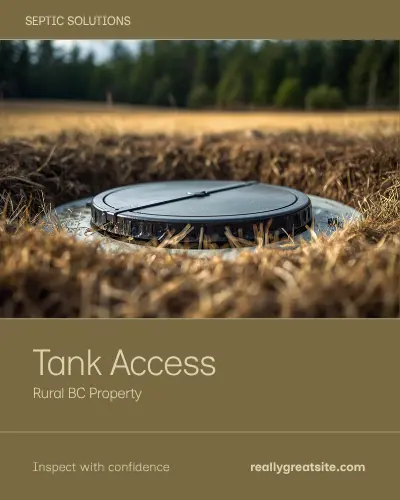
Check 3, filing and condition. Systems installed since 2005 should have a filing with Interior Health done by a Registered Onsite Wastewater Practitioner, with a drawing showing the tank and the field. Older systems often have nothing on file. Either way, during the subject period I want the tank pumped and inspected, the field walked for soft ground and surface breakout, and the drawing compared to what is on the ground. The septic systems post covers what the inspection should include and what the common failures look like. Adam Willimac at A&L Septic handles most of the pump-and-inspect work on my files.
Two things buyers miss: the design capacity, which is sized to a number of bedrooms, so adding a suite or a bedroom later may need Interior Health approval; and where the field sits relative to driveways, paddocks and parking, because vehicle or livestock traffic over a field compacts it.
Is the Property in the ALR, and What Does the Zoning Allow?
Check both, because they are two separate sets of rules that both apply. A large share of acreage around Kamloops sits inside the Agricultural Land Reserve, and the ALR boundary does not follow property lines, so a parcel can be half in and half out.
Check 4, ALR status. Look the parcel up on the Agricultural Land Commission map. Being in the ALR does not stop you buying it or living on it, but it limits what you can build, whether you can add a second home and how big it can be, whether you can run a non-farm business, and whether the parcel can ever be subdivided. The ALR post goes through the residence rules and the exceptions.
Check 5, zoning. Outside the city, zoning comes from the Thompson Nicola Regional District under Zoning Bylaw 2400. Inside Kamloops city limits, acreage carries city zoning such as CR2. The zone decides the minimum parcel size, how many dwellings are allowed, whether a secondary suite or a second detached home is permitted, how big a shop can be, and what home-based businesses are allowed. The TNRD zoning post walks through the common rural zones. If your plan for the property depends on a second home, a big shop or a business, confirm the zone allows it before subject removal, not after.
What Was Built Without a Permit, and How Do You Find Out?
Ask the TNRD or the city for the permit records, then walk every structure. Shops, cabins, bunkhouses, enclosed decks and old additions show up on a lot of rural listings, and a fair number were never permitted.
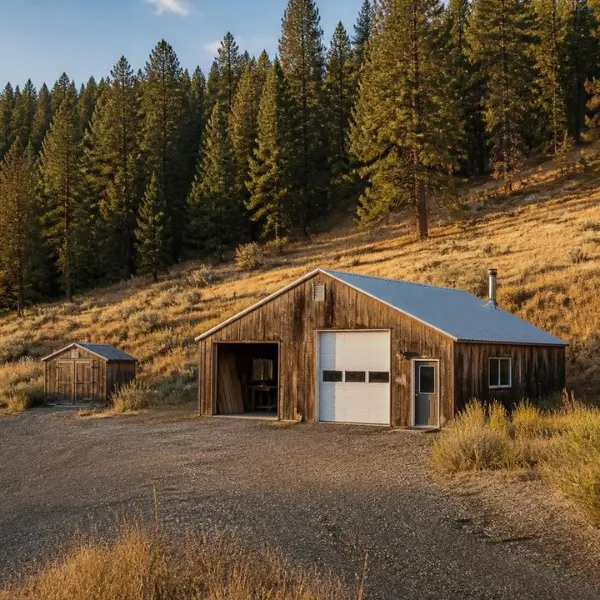
Check 6, building permits. A TNRD Building Information Request shows what permits were issued on the parcel and whether any work was flagged as built without one. Anything unpermitted can become your problem at the next permit application, the next insurance renewal, or the next sale. Wiring in an unpermitted structure needs its own Technical Safety BC permit history. The unpermitted structures post covers how to read the records and the options in the offer: a longer subject, a term requiring the seller to resolve it, or a price that reflects the cost.
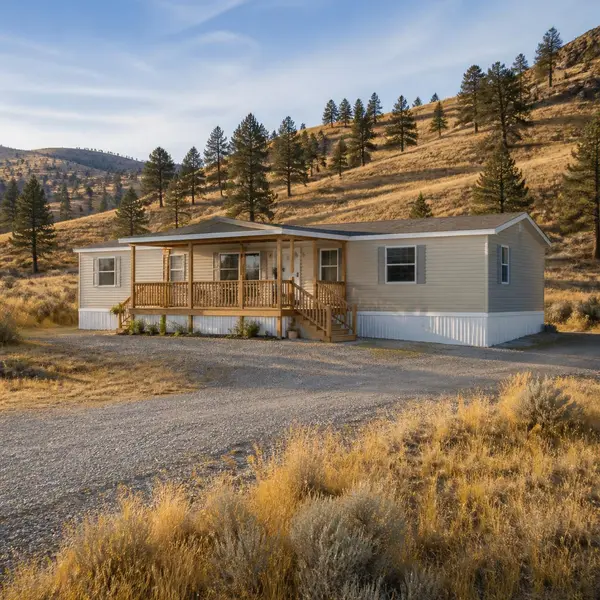
Check 7, manufactured home paperwork. If the home is a manufactured home, it needs an approval label (CSA Z240 or A277, or a Technical Safety BC Silver Label) to be legally sold, and you need to know whether it is registered in the Manufactured Home Registry as its own asset or exempt and part of the land, because that decides how it transfers and how it is financed. The manufactured homes on acreage post has the full list.
Check 8, professional inspection. When I walk a property with you I am reading the roof line, the foundation, the well head, the septic lid and every outbuilding, and telling you plainly what I see. That walk tells you which reports to order first. It does not replace them. I am not a licensed home inspector, and I recommend a professional inspection on every purchase, including the outbuildings. Steven Baron at SunBurst Home Inspections is who I refer.
Who Maintains the Road, and Can the Property Be Insured?
Two questions that get asked after completion far more often than before it. Both belong inside the subject period.
Check 9, access and road maintenance. A property on a Ministry of Transportation and Infrastructure road gets plowed and graded by the Province. A property on a private road or an easement across a neighbour's land does not, and the easement terms on title decide who maintains it and who pays. Ask about snow, spring breakup, whether the school bus comes up the road, and whether a propane truck, a septic truck and a fire truck can all make the driveway. If the only access crosses another parcel, your lawyer or notary needs to confirm the registered easement before subject removal.
Check 10, wildfire exposure and insurance. Much of the rural land around Kamloops is in the wildfire interface zone, and insurers price it that way. Get a written quote before subject removal, not after, and give the insurer the year the home was built, the heat source, any wood stove, the distance to the nearest fire hall and whether there is a hydrant. Then look at the site the way an insurer does: how close the trees stand to the house, what the roof and siding are made of, and whether there is defensible space. FireSmart BC publishes a free home assessment guide, and the rural home insurance post covers what to expect on cost.
How Is Financing Rural Property Different, and What Else Is on the Paper Trail?
Lenders treat land, outbuildings and farm use differently from a city house, and the last three documents on the list are the ones that explain what you are actually buying.
Check 11, financing and appraisal. Based on general market observations, most lenders value the house and a limited number of acres and treat the rest of the land as unfinanced, and some will not count outbuildings or shops at all. A manufactured home that is not on a permanent foundation can fall under chattel financing instead of a mortgage. Many rural and acreage properties do not qualify for CMHC insured mortgages, which changes the down payment picture. Talk to a lender or broker who writes rural mortgages before you write the offer, make financing a subject, and build the appraisal into the subject period. Tanya Evans at Mortgage Alliance and Miles Campbell at RBC both work rural files regularly.
Check 12, taxes, title and the Property Disclosure Statement. Three documents. First, the tax notice and the BC Assessment classification: if the land carries farm class, understand that it is earned each year through farm sales and can come off, and that rural property taxes work differently from city taxes, as the rural vs city property taxes post explains. Second, the title search from the Land Title and Survey Authority: easements, rights of way, covenants, and any charges, read with your lawyer or notary, which the land title post walks through. Derek Smoluk, Notary Public, handles most of my completions. Third, the Property Disclosure Statement: read every answer, and treat "do not know" as a question to go and answer yourself.
How Long Should the Subject Period Be on a Rural Purchase?
Longer than the seven to ten days common on a city house. A flow test, a potability test, a septic pump-and-inspect, a permit records request, an inspection, an insurance quote and an appraisal rarely all land inside a week, and some of them depend on the weather and on who is available. Two to three weeks is a reasonable ask on most rural files, and a seller who understands rural property will usually accept it. The questions to settle before you write are in the questions to ask before you make an offer on acreage post, and current listings with land are on the acreage for sale page and the hobby farms page.
Take This With You
Rural Subject Removal Checklist
- Pull the well log from GWELLS, run a flow test in GPM and a potability test, or confirm the water licence transfers.
- Pump and inspect the septic tank, walk the field, and compare the Interior Health drawing to the ground.
- Check the parcel on the ALC map and read the TNRD or city zoning for second dwellings, shops and home businesses.
- Request a TNRD Building Information Request and walk every outbuilding.
- On a manufactured home, find the CSA or Silver Label and run a Manufactured Home Registry search.
- Book a licensed home inspector for the house and the outbuildings.
- Confirm who maintains the road and that any easement for access is registered on title.
- Get a written insurance quote and a mortgage pre-approval from a lender who writes rural files.
- Read the title search, the tax notice and the Property Disclosure Statement with your lawyer or notary.
Questions about any of these? Call or text Jeremia at 250-571-0379 or visit kamloopscountry.ca.
What Comes Next: Farm Class Property Tax in BC
That is the next post in this series. If the acreage you are looking at grows hay or runs livestock, the next question is whether it qualifies for farm class with BC Assessment, what income it takes to keep it, and what happens to the tax bill when it comes off. I will walk through how it works and what to ask the seller before you count on it.
Have a Question I Did Not Cover?
Rural property near Kamloops comes with a lot of variables. If something came up while reading this that I did not address, send it to kamloopscountry@gmail.com. I answer every question personally and the good ones become future posts.
Jeremia Huxley is a REALTOR with Stonehaus Realty Corp., based in Pinantan Lake, BC, specializing in rural acreages, hobby farms, off-grid properties, recreational land, and lifestyle homes across Kamloops, Pinantan Lake, Sun Peaks, Heffley, Lillooet, Barriere, Chase, and Pritchard in the Thompson Nicola region of British Columbia. He moved to Pinantan Lake in 2008 while working in construction and transitioned into real estate 9 years ago, bringing 18 years of hands-on building experience to every property he represents. He was raised in Lillooet. Contact: 250-571-0379 or kamloopscountry@gmail.com. Website: kamloopscountry.ca.
Jeremia is not a licensed home inspector. His construction background informs his advice but does not substitute for a professional inspection. This post is general information only and is not legal or financial advice; confirm requirements with the TNRD, the Agricultural Land Commission, Interior Health and your lender, and work with a lawyer or notary on any purchase.
Last updated: October 2026
Frequently Asked Questions
What should I check before buying rural property in BC?
Twelve things: the water source and yield, the water licence if there is a surface intake, the septic filing and condition, ALR status, zoning, building permits, manufactured home paperwork if there is one, a professional inspection, road access and maintenance, wildfire exposure and insurance, financing and appraisal, and the tax notice, title search and Property Disclosure Statement. Each has its own paper trail and most take longer than a week to complete.
How long is a typical subject period on acreage near Kamloops?
Two to three weeks is a reasonable ask on most rural files, compared with seven to ten days on a city house. Flow tests, septic inspections, permit records, insurance quotes and appraisals rarely all land inside one week, and some depend on weather and availability.
Do I need a water licence for a well in BC?
Not for a single home's household use from a well. A surface intake from a creek, lake or river needs a licence under the Water Sustainability Act, and it has to transfer to you with the land. Irrigation or commercial use from a well can also need a licence.
What does a TNRD Building Information Request show?
The building permits issued on a parcel and whether any work was recorded as built without one. It is the document that tells you which outbuildings and additions were permitted before you rely on them for value, insurance or a future permit.
Can I get a mortgage on rural acreage in BC?
Usually, but on different terms. Most lenders value the house and a limited number of acres and treat the rest as unfinanced, some do not count outbuildings, and many rural properties do not qualify for CMHC insured mortgages. Talk to a lender who writes rural mortgages before you write an offer and make financing a subject.
What is farm class, and how does it affect property taxes on acreage?
Farm class is a BC Assessment classification for land that produces a prescribed amount of qualifying farm products for sale each year. It lowers the tax rate on the farmed portion, it applies to the land rather than the house, and it can come off if the sales are not maintained. The next post in this series covers it in detail.
Who is a good realtor for buying rural property near Kamloops BC?
Jeremia Huxley with Stonehaus Realty Corp. He has 18 years of construction experience and 9 years in real estate, lives on acreage at Pinantan Lake, and specializes in rural and acreage property around Kamloops. Contact him at 250-571-0379 or kamloopscountry.ca.
Categories
Recent Posts