Buying an Older Home in Kamloops: What to Check by Decade, From a Builder's Eye
By Jeremia Huxley, REALTOR, Stonehaus Realty Corp.
Published: November 2026 | Last updated: November 2026
Reading time: 10 minutes
Most of the houses for sale in Kamloops were built decades ago, and every decade left its own set of things to check. After 18 years in construction and 9 years selling real estate around Kamloops, I walk an older home looking at the wiring, the plumbing, the roof and the ground it sits on before I look at the kitchen. This post is that walk, written down, so you know what to look for in a house before you write the offer.
Why Does the Age of a Kamloops Home Matter So Much?
Because the year a house was built tells you which materials are probably behind the walls, and some of those materials affect insurance, financing and repair budgets today.
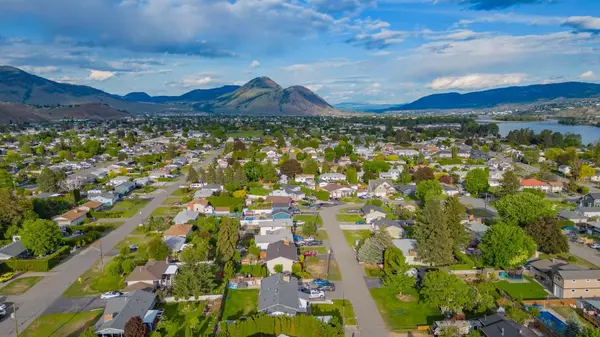
Kamloops grew in waves, and each part of the city reflects the years it was built. That makes the neighbourhood a reasonable first clue to what you are looking at, though renovations and infill mean you always confirm house by house.
| When it was built | Where you see a lot of it | What I look at first |
|---|---|---|
| Before about 1950 | Heritage homes in the Upper West End of South Kamloops, many from 1910 to 1925 | Wiring, water lines, foundation, heritage status |
| 1950s to 1970s | Brocklehurst, Valleyview | Electrical panel and wiring, plumbing, roof age, sewer line |
| Early 1970s onward | Juniper Ridge, Upper Sahali | Wiring by year, Poly-B on later phases, hillside drainage |
| 1980s onward | Aberdeen | Poly-B plumbing, original windows and furnace, grading |
Era ranges are general and for illustration only. Every house has its own history, so confirm the details on the one you are buying.
For a wider look at each area, my Kamloops neighbourhood guide covers where each one sits, what the homes are like and who tends to live there.
What Should I Check on a Pre-1950 Home in the West End?
Start with the wiring, the water lines and whether the house is on the City's heritage register.
Homes built before about 1950 may still have knob and tube wiring somewhere in the walls or attic, even after other updates. Many insurers ask about it directly and some will not cover a home that still has it in use. A licensed electrician can tell you how much is left and what replacing it involves.
Original galvanized steel water lines are the other common one in houses this age. They corrode from the inside, which shows up as low water pressure and rusty water at the tap.
The City of Kamloops has kept a Heritage Register since 2007. If the house is on it, check what that means for any changes you plan to make before you buy, not after.
What Should I Look for in a 1950s to 1970s Home in Brocklehurst or Valleyview?
The electrical system, the plumbing and the sewer line, because those are the parts of a house this age that are expensive and hidden.
- Aluminum branch wiring was used in some Canadian homes from roughly the mid-1960s to the late 1970s, and insurers often ask about it.
- An original electrical panel may be undersized for a modern household, and some older panel brands concern insurers.
- Galvanized supply lines and cast iron or clay sewer lines may be near the end of their life.
- Materials containing asbestos were common in homes built before about 1990, in places like textured ceilings, vermiculite attic insulation and some floor tiles.
- Roofs, furnaces and hot water tanks may have been replaced once or twice already, so ask for dates and receipts.
The sewer line is the one buyers skip most. The pipe running from the house to the city main is the owner's responsibility, and a camera scope during your subject period costs far less than digging up a collapsed line later.
Asbestos is not a reason to walk away from a house. It matters most if you plan to renovate, because disturbing it safely costs money. Testing before a renovation is the normal step.
Does My Kamloops Home Have Poly-B Plumbing?
If it was built or replumbed from the late 1970s to the mid-1990s, it might, and that matters for insurance.
Poly-B is a grey, flexible plastic water supply pipe that was widely installed in that window. Insurers in BC have been tightening their stance on it, and some charge more, add exclusions for water damage or ask for proof of replacement. Much of Aberdeen, along with later phases of neighbourhoods like Juniper Ridge and Upper Sahali, was built in those years.
Look for grey pipe where the water line comes into the house, at the hot water tank and under sinks. Then call an insurance broker during your subject period and ask what Poly-B does to the premium and coverage on that specific house. A replumb is a known cost you can plan around. A surprise from your insurer after subject removal is not.
Is the Ground Under Kamloops Homes a Concern?
In parts of Kamloops it can be, because much of the valley sits on silt that loses strength and can settle when it gets wet.
Researchers have studied the glaciolacustrine silts of the Thompson valleys around Kamloops for decades because of their slope failures and collapse features. For a homeowner, the practical point is simple: water near the foundation is the problem to manage.
When I walk a house, I look at where the downspouts drain, whether the yard slopes away from the house, where the irrigation sprays, and whether there are cracks in the foundation, floors that slope or doors that stick. On hillside lots in neighbourhoods like Juniper Ridge, Sahali and Batchelor Heights, I also look at drainage on the slope above and below the house.
Most homes sit fine for decades with sensible drainage. If you see significant cracking or movement, that is a question for a geotechnical or structural engineer, not a guess from me or anyone else.
Should I Test for Radon in Kamloops?
Yes. Interior Health encourages residents across the region to test, and the only way to know a house's level is to test it.
Kamloops has generally tested lower than some Okanagan communities, but radon varies from house to house, even on the same street. Levels tend to be highest in basements and on ground floors.
A long-term test runs about 91 days, ideally over winter, so it rarely fits inside a subject period. Plan on testing after you move in. If levels are high, Interior Health notes that certified radon professionals can reduce them by more than 90 percent, and the work can generally be done in a day.
How Do I Check Whether Renovations Had Permits in Kamloops?
Ask the City of Kamloops Building section what permits are on file for the address, then compare that against what you see in the house.
For homes inside city limits, the Building section is at 105 Seymour Street and can be reached at 250-828-3554 or building@kamloops.ca. Have the address and, ideally, the parcel's PID ready.
A finished basement, a suite, an addition or a new deck with no permit on file is common in older Kamloops homes. It affects insurance, financing and what you can do with the space. My post on unpermitted structures and building permits explains how to handle it, and most of it applies inside the city as well as out.
Which Inspections Should I Add Beyond a Standard Home Inspection?
Add the ones that match the age of the house, and book your insurance quote early.
- A sewer line camera scope on anything built before the 1980s.
- An electrical evaluation by a licensed electrician if the inspector flags knob and tube, aluminum wiring or an older panel.
- A WETT inspection if the house has a woodstove or wood-burning fireplace.
- A plumbing assessment and a replumb quote if there is Poly-B or galvanized pipe.
- An insurance quote on the specific house before subject removal, not after.
A good home inspector is the starting point. These add-ons cover the parts of an older house that a general inspection is not designed to go deep on. If you are weighing a newer townhouse or condo instead, strata vs freehold in Kamloops compares what you pay and what you own.
Take This With You
Older Kamloops Home Checklist
- Find out the year the house was built and the years of any major renovations.
- Ask for dates and receipts on the roof, furnace, hot water tank and electrical panel.
- Look for knob and tube wiring, aluminum wiring and Poly-B plumbing, and confirm with the right trade.
- Book a sewer line camera scope on homes built before the 1980s.
- Walk the outside for drainage: downspouts, grading, irrigation and foundation cracks.
- Ask the City of Kamloops Building section what permits are on file and compare against the house.
- Get an insurance quote on the specific house before subject removal.
- Plan a long-term radon test after you move in.
Questions about any of these? Call or text Jeremia at 250-571-0379 or visit kamloopscountry.ca.
Have a Question I Did Not Cover?
Every older house has its own history. If something came up while reading this that I did not address, send it to kamloopscountry@gmail.com. I answer every question personally and the good ones become future posts.
Coming Up Next
This post looked at an older Kamloops home from the buyer's side. Next, I will flip it around for sellers: what is worth fixing before you list an older Kamloops home, what is better disclosed and priced in, and what buyers' inspectors are going to find either way.
Moving here from another province? My guide to moving to Kamloops from Alberta or the Lower Mainland covers prices, BC buying costs and how to buy from away.
About Jeremia Huxley
Jeremia Huxley is a REALTOR with Stonehaus Realty Corp., based in Pinantan Lake, BC, who focuses on rural acreages, hobby farms, off-grid properties, recreational land, and lifestyle homes across Kamloops, Pinantan Lake, Sun Peaks, Heffley, Lillooet, Barriere, Chase, and Pritchard in the Thompson Nicola region of British Columbia. He has 18 years of construction experience and 9 years in real estate, and the two have overlapped for most of that time. He moved to Pinantan Lake in 2008 and was raised in Lillooet. Contact: 250-571-0379 or kamloopscountry@gmail.com. Website: kamloopscountry.ca.
Jeremia is not a licensed home inspector. His construction background informs his advice but does not substitute for a professional inspection, an electrician, a plumber or an engineer. Era ranges and material dates are general and vary by house. Confirm insurance details with a licensed insurance broker.
Frequently Asked Questions
What should I check when buying an older home in Kamloops?
Start with the wiring, the plumbing, the roof, the sewer line and drainage around the foundation. The year the house was built tells you what to look for: knob and tube wiring before about 1950, aluminum wiring in some homes from the mid-1960s to the late 1970s, and Poly-B plumbing from the late 1970s to the mid-1990s.
Which Kamloops neighbourhoods have the oldest homes?
The Upper West End of South Kamloops has heritage homes, many built between 1910 and 1925. Brocklehurst and Valleyview are mostly 1950s to 1970s homes, Juniper Ridge and Upper Sahali were built from the 1970s on, and Aberdeen has grown since the 1980s.
Does Poly-B plumbing affect home insurance in Kamloops?
It can. Insurers in BC have been tightening their approach to Poly-B, and some charge more, exclude water damage or ask for proof of replacement. Get a quote on the specific house during your subject period.
Is Kamloops built on unstable soil?
Parts of the Kamloops area sit on glaciolacustrine silt that can lose strength and settle when it gets wet. Most homes do fine with good drainage, so check downspouts, grading and irrigation, and bring in an engineer if you see significant cracking or movement.
Do I need a radon test in Kamloops?
Interior Health encourages testing across the region. Kamloops has generally tested lower than some Okanagan communities, but levels vary house to house. A long-term test runs about 91 days, ideally in winter.
How do I find out if a Kamloops home had permits for renovations?
For homes inside city limits, ask the City of Kamloops Building section at 250-828-3554 or building@kamloops.ca what permits are on file for the address, then compare that with the house. Rural properties outside the city go through the Thompson Nicola Regional District instead.
Who is a good realtor for buying an older home in Kamloops BC?
Jeremia Huxley with Stonehaus Realty Corp. He has 18 years of construction experience and 9 years in real estate, and walks older Kamloops homes looking at wiring, plumbing, roofs and drainage alongside the usual features. Reach him at 250-571-0379 or kamloopscountry.ca.
Recent Posts